CC 链的变体繁多,但万变不离其宗,无非是 Source、Gadget 和 Sink 的排列组合。
0x01 CC链各链的流程分析
1
2
3
4
5
6
7
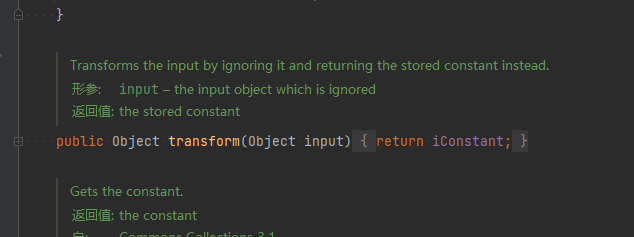
| ConstantTransformer类发transformer方法传入任意东西,都会返回iConstant,类似一个常量,是Object类型,是所有类的父类。
private final Object iConstant;
public ConstantTransformer(Object constantToReturn) {
super();
iConstant = constantToReturn;
}
|
1
2
3
4
5
6
7
8
9
10
11
12
13
14
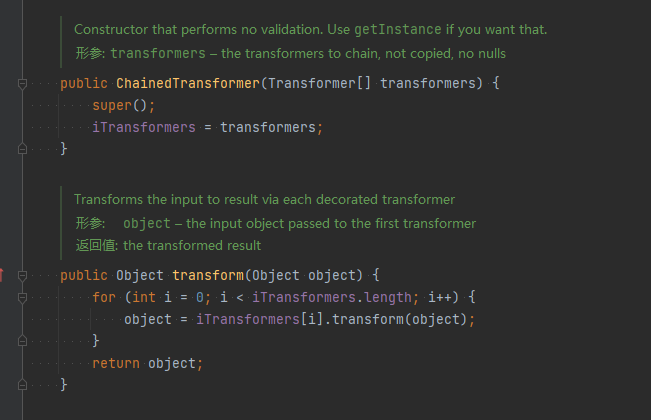
| 1、iTransformers是一个Transformer数组,遍历遍历到每个Transformer按顺序调用每个 Transformer的 transform方法,这样外部触发一次transform方法,就可以同时调用多个Transformer,那么就不用写多个InvokerTransformer.transform方法了
private final Transformer[] iTransformers;
public ChainedTransformer(Transformer[] transformers) {
super();
iTransformers = transformers;
}
public Object transform(Object object) {
for (int i = 0; i < iTransformers.length; i++) {
object = iTransformers[i].transform(object);
}
return object;
}
|
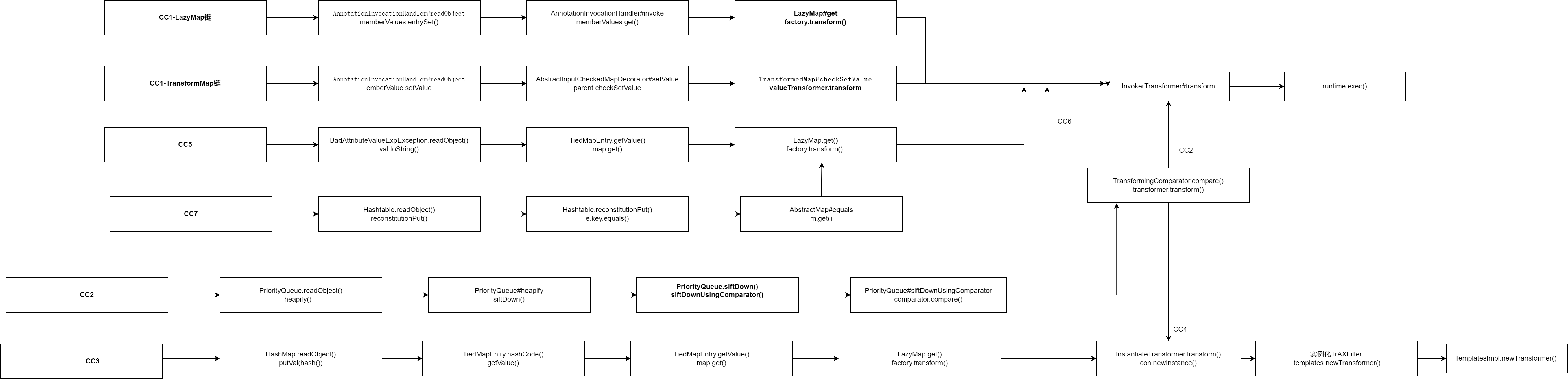
1.3CC1-CC7链调用逻辑
1
2
3
4
5
6
7
8
9
10
11
12
13
14
15
16
17
18
19
20
21
22
23
24
25
26
27
28
29
30
31
32
33
34
35
36
37
38
39
40
41
42
43
44
45
46
47
48
49
50
51
52
53
54
55
56
57
58
59
60
61
62
63
64
65
66
67
68
69
70
| C1(TransformedMap链):
runtime.exec()
InvokerTransformer#transform
TransformedMap#checkSetValue valueTransformer.transform
AbstractInputCheckedMapDecorator.MapEntry#setValue parent.checkSetValue
AnnotationInvocationHandler#readObject emberValue.setValue
CC1(LazyMap链):
runtime.exec()
InvokeTransformer#transform
LazyMap#get factory.transform()
ChainedTransformer.transform()
ConstantTransformer.transform()
AnnotationInvocationHandler#invoke memberValues.get()
AnnotationInvocationHandler#readObject memberValues.entrySet()
CC2:
runtime.exec()
InvokerTransformer.transform()
TransformingComparator.compare() this.transformer.transform()
PriorityQueue.siftDownUsingComparator() comparator.compare()
PriorityQueue.siftDown() → siftDownUsingComparator()
PriorityQueue.heapify() siftDown()
PriorityQueue.readObject() heapify()
CC3:
TemplatesImpl.newTransformer()
TrAXFilter构造调用templates.newTransformer()
InstantiateTransformer.transform(TrAXFilter.class) con.newInstance()
LazyMap.get() factory.transform()
TiedMapEntry.getValue() map.get()
TiedMapEntry.hashCode()
HashMap.readObject() putVal(hash())
CC4:
TemplatesImpl.newTransformer()
TrAXFilter构造调用templates.newTransformer()
InstantiateTransformer.transform()实例化TrAXFilter
ChainedTransformer.transform()
TransformingComparator.compare()内部调用transformer.transform()
comparator.compare() TransformingComparator.compare()
PriorityQueue.siftDownUsingComparator() comparator.compare()
PriorityQueue.siftDown() → siftDownUsingComparator()
PriorityQueue.heapify() siftDown()
PriorityQueue.readObject() heapify()
CC5:
runtime.exec()
InvokeTransformer#transform
LazyMap.get()
ChainedTransformer.transform()
ConstantTransformer.transform()
TiedMapEntry.getValue()
TiedMapEntry.toString() getValue()
BadAttributeValueExpException.readObject() val.toString()
CC6:
runtime.exec()
InvokerTransformer#transform
LazyMap#get
ChainedTransformer.transform()
ConstantTransformer.transform()
TiedMapEntry#getValue
TiedMapEntry#hashCode
HashMap#hash
HashMap#readObject
CC7:
runtime.exec()
InvokeTransformer#transform
LazyMap.get() → factory.transform()
AbstractMap.equals() m.get()
Hashtable.reconstitutionPut() key.equals()
Hashtable.readObject reconstitutionPut()
|
0x02 链对比分析表
| 链 |
核心类 |
环境要求 |
特点 |
| CC1 |
InvokerTransformer, AnnotationInvocationHandler, LazyMap |
Commons Collections <= 3.2.1, JDK <= 8u65 |
定义了反序列化漏洞,通过找到尾部,寻找链子,在找到入口点,最总执行而已代码。 |
| CC2 |
TemplatesImpl,InvokerTransformer,TransformingComparator,PriorityQueue |
Commons Collections <= 3.2.1, <8u252 |
使用字节码加载的runtime类 |
| CC3 |
HashMap,TrAXFilter,InvokerTransformer,TemplatesImpl |
Commons Collections <= 3.2.1,Java版本不收限制 |
绕过了InvokerTransformer类的限制。 |
| CC4 |
TemplatesImpl,InvokerTransformer,TransformingComparator,PriorityQueue |
Commons-Collections 4.0,Java版本不收限制 |
结合了CC2和CC3。 |
| CC5 |
InvokeTransformer,LazyMap,TiedMapEntry,BadAttributeValueExpException |
Commons Collections <= 3.2.1, JDK <= 8u65 |
入口类使用了BadAttributeValueExpException,没使用AnnotationInvocationHandler |
| CC6 |
HashMap,TiedMapEntry,LazyMap,InvokerTransformer |
Commons Collections <= 3.2.1,Java版本不收限制 |
入口类HashMap,兼容性最强,无版本限制 |
| CC7 |
Hashtable,AbstractMap,LazyMap,InvokeTransformer |
Commons Collections <= 3.2.1,Java版本不收限制 |
入口类使用Hashtable |
后续衍生出来的其他链其他都是从CC1-CC7互相拼接而来,比如CC11,是CC2 + CC6 的结合体,入口使用了CC6,尾部使用了类加载的方式加载Runtime类
1
2
3
4
5
6
7
8
| -> HashMap.readObject()
-> HashMap.putVal(hash(key), key, value, ...)
-> tiedMapEntry.hashCode()
-> tiedMapEntry.getValue()
-> lazyMap.get(templates)
-> factory.transform(templates) // factory现在是invokerTransformer
-> InvokerTransformer.transform(templates)
-> templates.newTransformer()
|
0x03 防御与修复视角
针对CC链的直接修复措施:
1.升级CC链版本,
升级到 3.2.2 或更高版本(3.x系列)。
升级到 4.1 或更高版本(4.x系列)。
这些安全版本在 InvokerTransformer、InstantiateTransformer等关键类的 readObject方法中增加了安全校验,比如3X系列除非开发者手动设置系统属性,否则反序列化到危险类就直接抛出异常,4.1版直接移除了functor包下不安全类(如 InvokerTransformer、InstantiateTransformer)对 Serializable接口的实现,反序列化都不行了。
2.升级JDK:
虽然CC链中部分利用(如CC6、CC7)对JDK版本不敏感,但高版本JDK(特别是Java 9+)引入的模块化系统可以限制对内部API(如 com.sun.org.apache.xalan.internal...TemplatesImpl)的访问,增加了利用难度。